
The Cutting Edge of Bee Conservation
Posted March 13, 2026 by Erica Schroeder
I saw a post from Mt. Cuba Center this week that stopped me in my tracks. Apparently right now is the ideal time to cut back last summer’s new flower stems to support stem-nesting native bees!
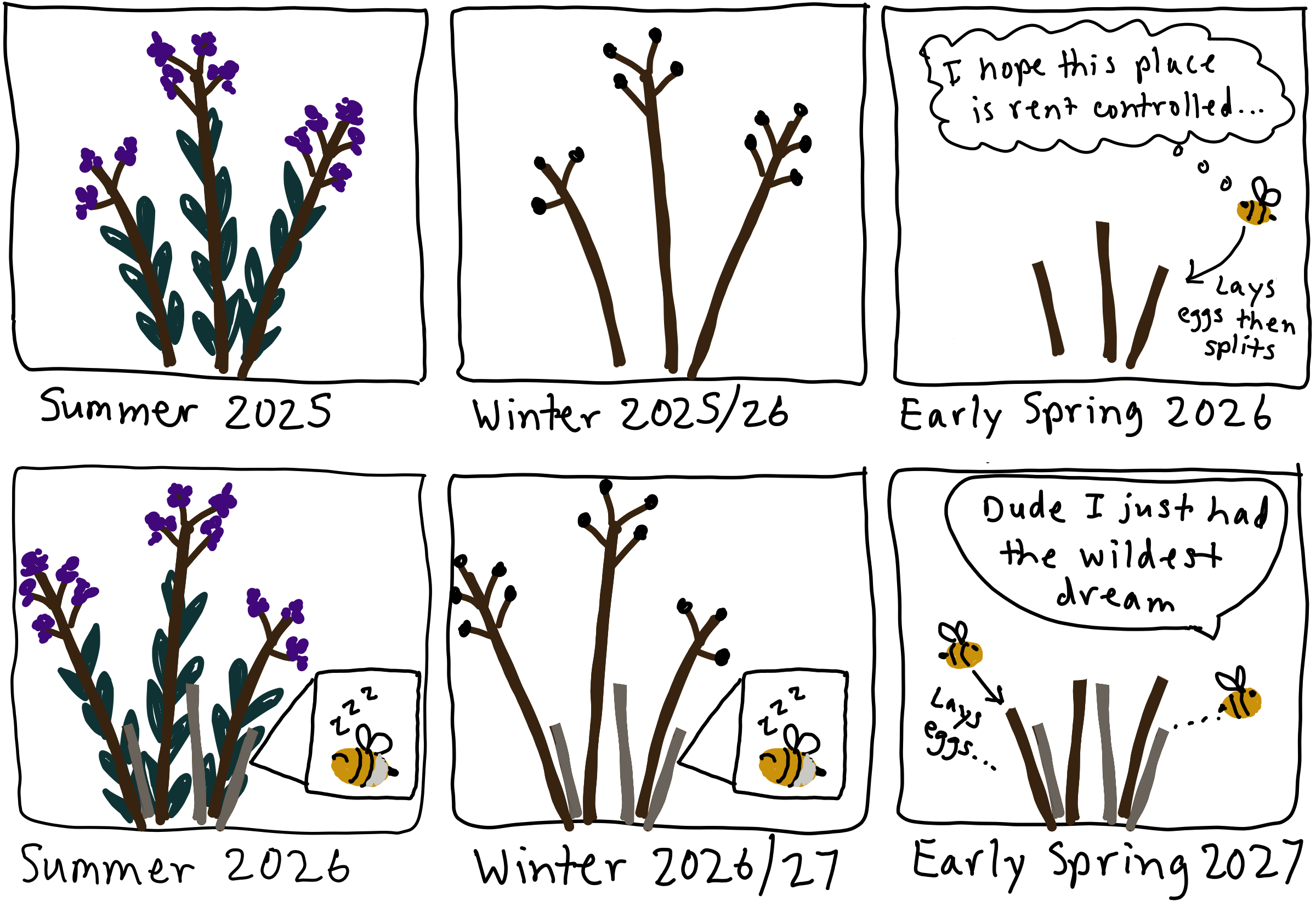
This prompted me to do some digging to find out more about stem-nesting bees. I was shocked to learn that after the bees emerge and lay eggs in spring, the larva, pupa, and even fully formed adult bees spend THE ENTIRE REST OF THE YEAR living cooped up in these stems! We can protect these babies (and teenagers and young adults) by leaving old stems in place, and cut back only the new stems to give the females more primo real estate for egg laying.
I really want to emphasize that we’re only cutting last season’s new growth — stems that are essentially guaranteed not to have any bees in them yet. Cut them back to about 18-24 inches, straight across with clean sharp pruners. Then put the pruners away and never touch those stems again. Seriously, those are bee condos now.
I’ve attempted to summarize the bee-haviors with this scientifically accurate illustration:
Here are some particularly useful stems to have in your garden to support these bees:
- Raspberries
- Elderberries
- Hydrangea
- Coneflowers
- Sunflowers
- Asters
- Ironweed
- Joe Pye Weed
- Bee Balm
Finally, the Xerces Society is a wonderful resource on all things invertebrate. You can download their Nesting and Overwintering Habitat pdf for some really great information, images, and ideas to help out our pollinators!
As soon as this snow melts and the plants dry out, I’ll be out there doing my own kind of property development!
— Erica